Blog
WTM London 2026: three interactive experiences to live Spain on the stand
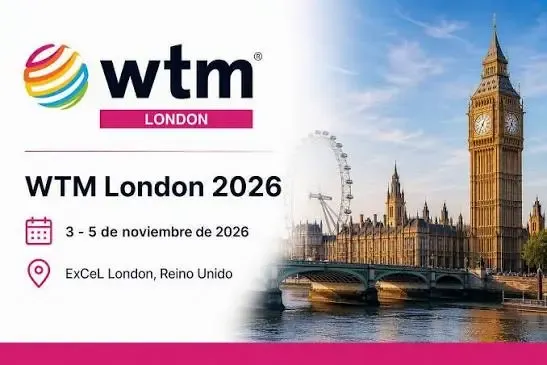
From 3 to 5 November, once again, we are developing several interactive experiences for Turespaña at WTM London: Photo AI, an AI assistant built on official content and a 3D map of connections with London.
Tuesday 3 November, ExCeL London. Picture a tour operator with ten spare minutes between meetings, or a travel agent looking for ideas for next season. They walk down aisles where destinations from all over the world compete for attention, and pass the Spain Pavilion.
What makes them stop? Hardly a brochure. A screen that answers them, surprises them or teaches them something they did not know, quite possibly.
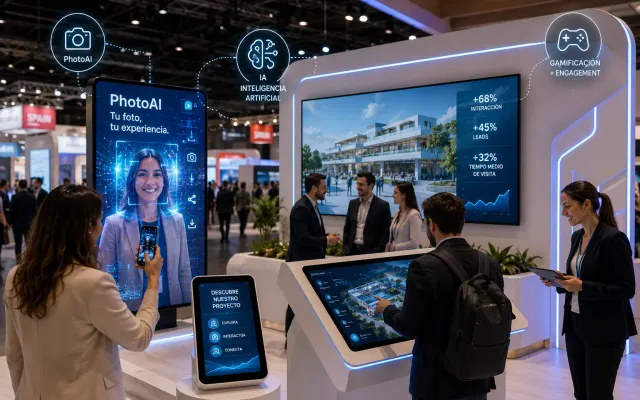
Once again, we are developing several interactive experiences for Turespaña (Tourspain) at WTM London, from 3 to 5 November 2026: Photo AI, a conversational AI assistant trained on Turespaña's own exclusive content, and an interactive 3D map showing the main connections between Spain and London. Three different experiences with one goal: to give the brand more visibility and authority, and to let visitors enjoy themselves while they discover the destination.
WTM London 2026: the show and the market
WTM London takes place from 3 to 5 November 2026 at ExCeL London. According to the organisers, the 2025 edition generated £2.2 billion in business deals, with 182 countries represented and exhibitor numbers up 5% year on year. This year it launches WTM Travel Tech, a co-located event devoted to travel technology.
For Spain, London is not just another show. According to the INE Frontur statistics published on 2 October 2026, the United Kingdom leads Spain's source markets this year: more than 13.9 million tourists between January and August, up 5.4% on the same period of 2025. In August alone, more than 2.4 million arrived, up 9.3%.
Turespaña brings Spanish tourism boards and businesses together in its pavilion, as set out in its call for participation at WTM 2026 (in Spanish). The stand speaks at once to trade buyers and to co-exhibitors who need to draw a crowd.
So the challenge is not to introduce Spain to a market that already knows it well. It is to show something new, useful and memorable in very little time.
Three experiences, three jobs
Each experience plays a different role on the stand:
- Photo AI draws people in: it makes sense in a second and leaves a memento visitors share.
- The AI assistant answers: it handles specific questions about destinations, routes and trips using official content.
- The 3D map makes the case: it turns connectivity between Spain and London into something you explore with a fingertip.
Combining them makes sense because each one asks for a different amount of time: a few seconds for the photo, a short conversation with the assistant, a glance or a longer exploration of the map. That way the stand works both for people in a hurry and for those who decide to stay.
Photo AI: Spain on the visitor's phone
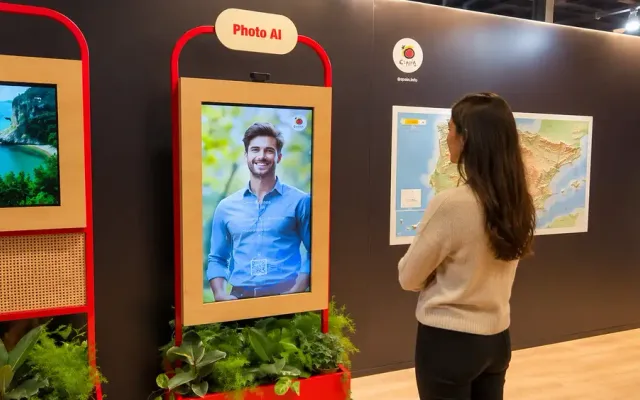
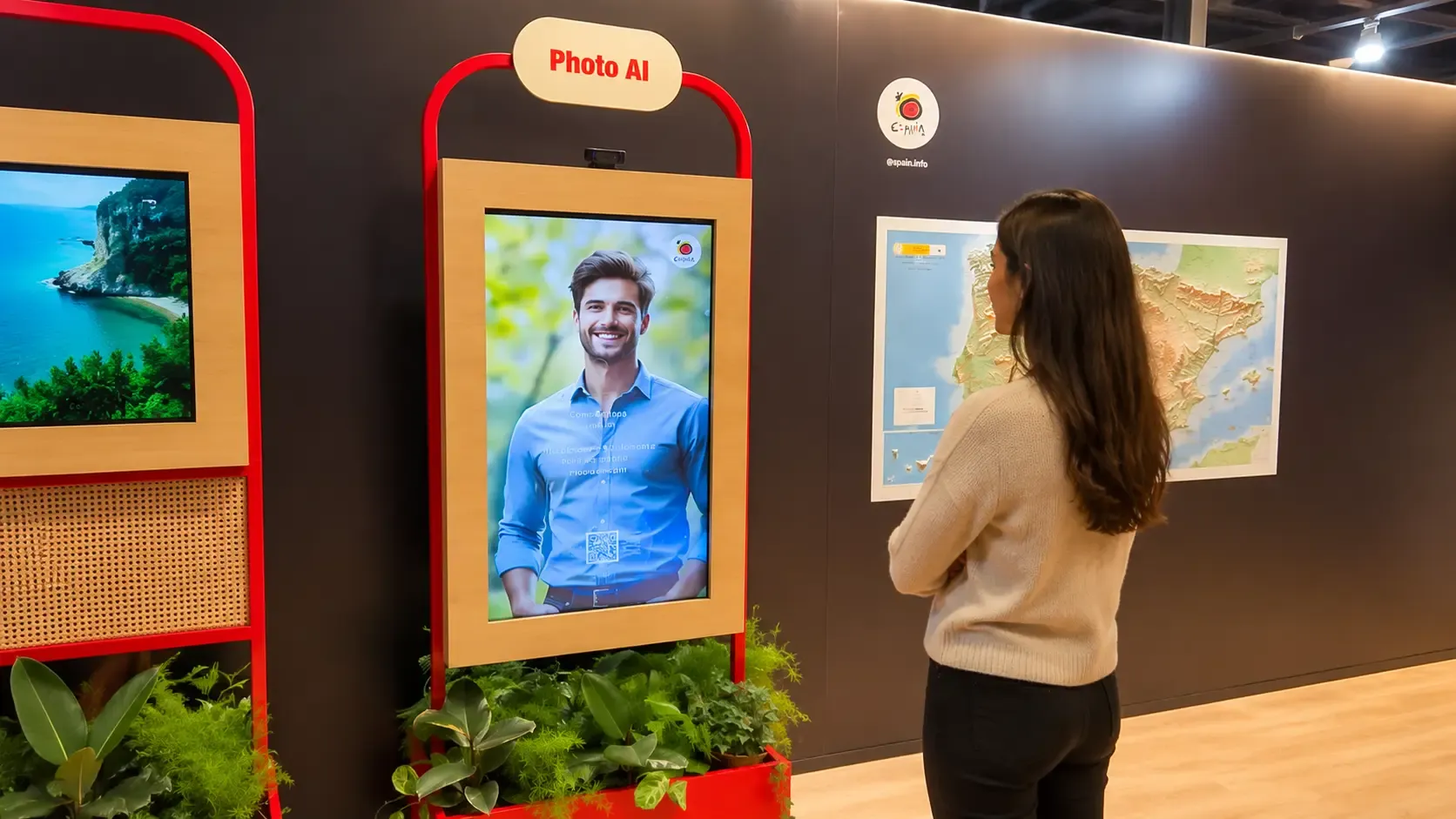
Photo AI is one of the flagship activations of WOMI, our own AI experience platform. For Turespaña we designed a custom, intuitive interface with a three-step viewer: visitors take their photo and the AI transports them to places across Spain.
Its value for the brand goes beyond the stand. Every image a visitor saves or shares is an invitation to travel, carrying Spain's branding, and it reaches people who never set foot in the venue. As we explained when writing about gamified experiences, AI-generated images should always be labelled: it costs little and builds trust.
An AI assistant that speaks with Turespaña's knowledge
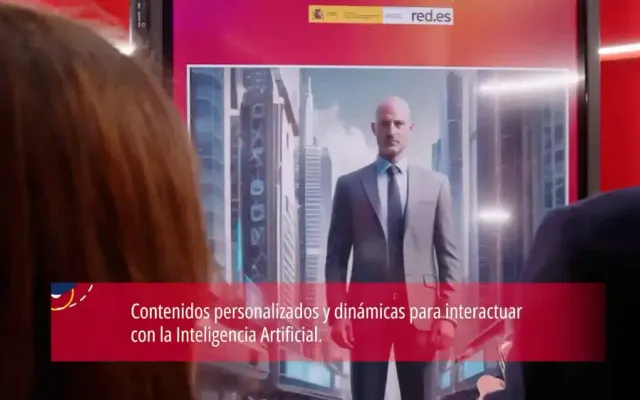
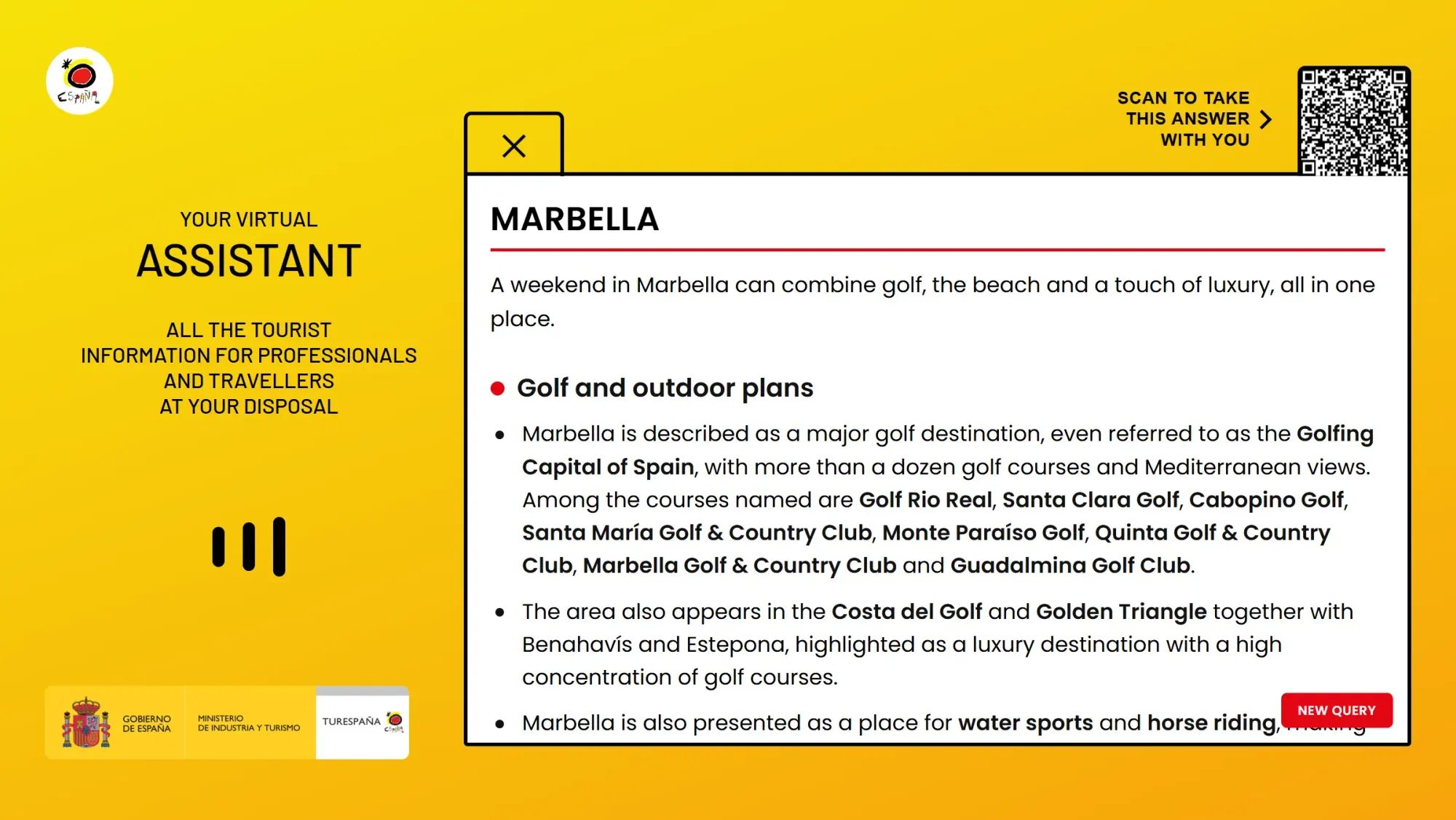
The conversational assistant is trained on Turespaña's own exclusive content. Visitors ask a question and get recommendations on tourism context, destinations, routes and trips around Spain, laid out in an easy-to-read card. On screen it introduces itself as a virtual assistant with all the tourist information professionals and travellers need. Every answer includes a QR code to take it away on a phone and a button to start a new query.
The difference from a generic chatbot lies in the source. An assistant that answers with the official content of the national tourism board does more than inform: it strengthens the brand's authority, because every recommendation comes from those who know the destination best.
An agent like this has to meet a few conditions:
- Answer only from verified content, and recognise when a question falls outside it.
- Introduce itself as AI from the first interaction.
- Speak the market's language: in London, natural English, not a literal translation.
- Ask for no personal data to give an answer: the QR code is enough to take it away.
- Keep it short on screen and leave the detail for the phone.
The 3D map: connectivity between Spain and London at your fingertips
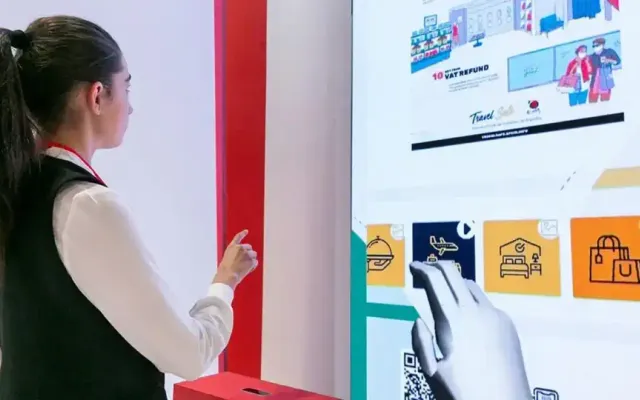
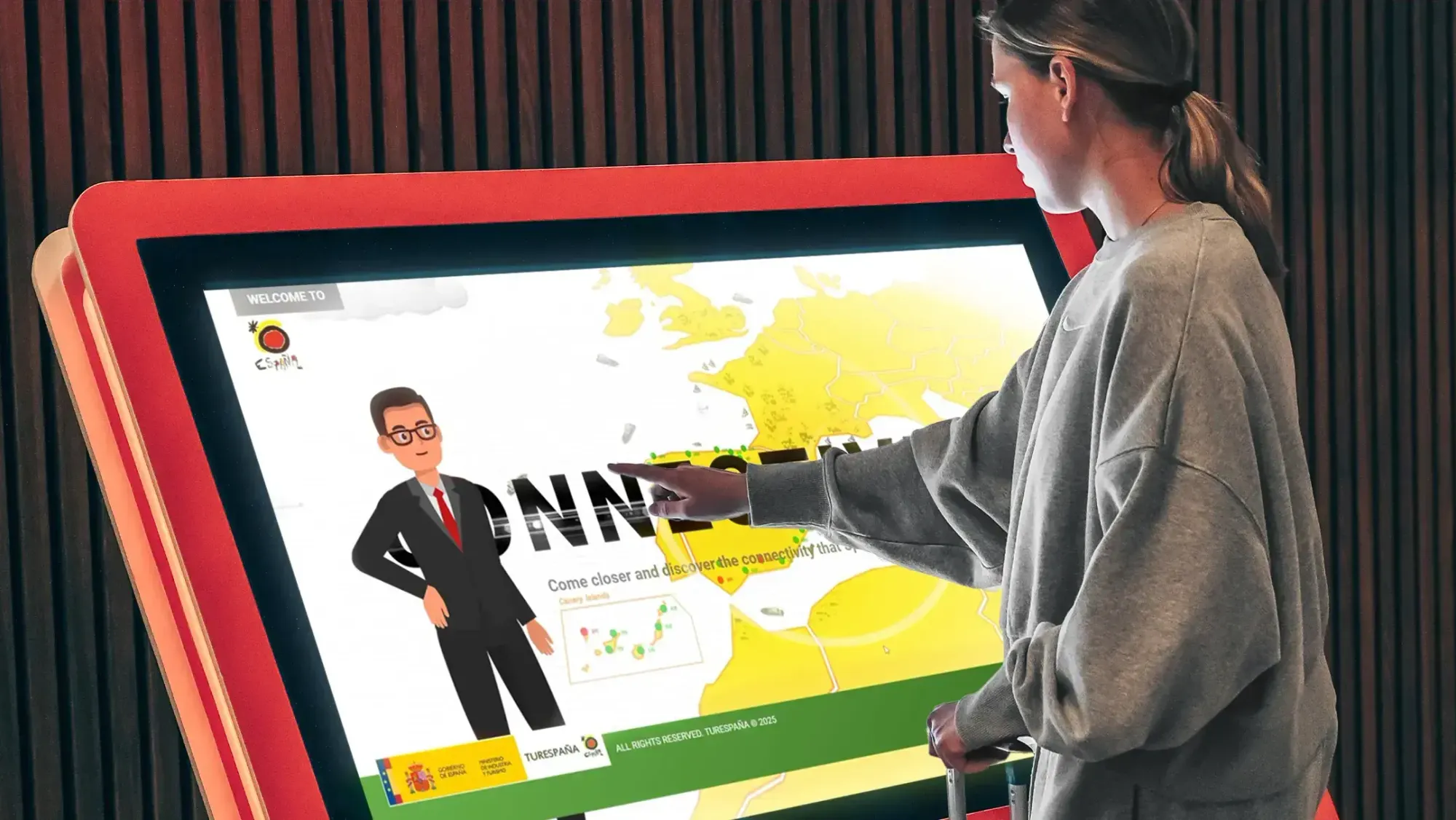
The interactive 3D map shows the main connections between Spain and London. An animated host welcomes visitors and the screen invites them to come closer and discover the connectivity. Visitors explore the map with a fingertip and see at a glance how London and Spanish destinations are linked.
For a tour operator or an airline, connectivity is a first-order sales argument: without connections there is no product. For travellers, it is instant inspiration: from here I can get there. The same content serves both audiences.
It is not the first map we have turned into an experience for Turespaña. In 2022 we developed a large-format augmented reality map table: visitors point a tablet at it and tourism content appears on top of the map.
What the brand gains
The three experiences reinforce each other. Together they bring:
- Visibility: the aisle stops, and every shared photo carries the brand beyond the venue.
- Authority: answers come from the official source, not from a generic search.
- Experience: visitors play, ask and explore in context, without feeling cornered.
- Footfall for co-exhibitors: anyone drawn in by the photo or the map is already inside the pavilion, a step away from the businesses exhibiting there.
- Market insight: we propose analysing the assistant's most frequent questions in aggregate and anonymously. What the British public asks at the show is a valuable clue for shaping promotion.
What works for any destination stand
The WTM approach can be applied to any destination, region or tourism brand. We suggest this order:
- Give each experience a job: draw people in, answer, make the case.
- Start from official, verified content, not from whatever the AI "knows" on its own.
- Adapt language and examples to the market of each show.
- Give visitors something to take away: a photo, an answer, a route.
- Design for the aisle: it should read from several metres away and the first action should be obvious, as we explained in interactive apps for trade fairs and congresses.
- Decide before the event what you will measure: participation, queries, shared images or dwell time.
If you are at WTM London from 3 to 5 November, drop by the Spain Pavilion and try them.
Preparing your destination, region or tourism brand for FITUR or the next international show? Tell us what you want visitors to take away and we will design the interactive experience that makes it happen.