Gamified experiences people want to live: quizzes, treasure hunts and AI photos
A quiz, a treasure hunt or an AI photo booth rarely works on its own. What works is a well-designed journey: a clear goal, fair rules, real movement and an image visitors want to keep.
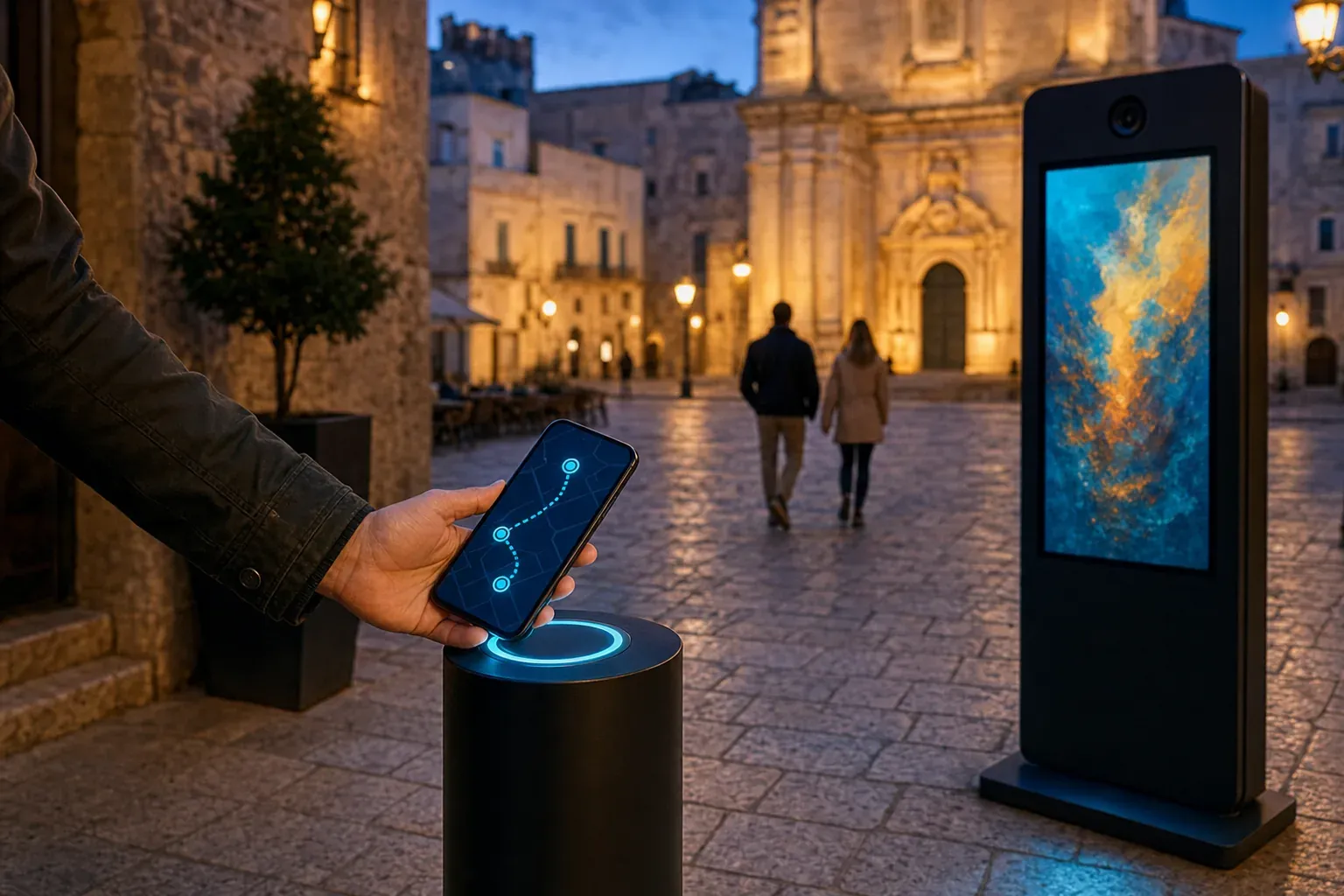
Saturday afternoon in a historic town centre. Picture a family scanning a code at the tourist office and receiving their first clue. They cross two squares, answer questions about what they have just seen, solve a team challenge beside a fountain and finish at a kiosk that turns their photo into an illustration of the place. They leave with the image on their phone and the feeling of having discovered something.
Nobody explained the destination to them with a leaflet. They walked it, played it and took home proof.
Gamification that works is not a game bolted onto an event: it is a journey designed around a goal, fair rules and a memory visitors want to keep. At Viseni we have spent more than ten years creating interactive experiences for trade fairs, events and public institutions, and the difference rarely lies in the technology chosen. It lies in how the pieces connect.
Start with the goal, not the screen
The first question is not "shall we do a quiz or an AI photo?". It is what visitors should do, know or feel when they finish. Answer that, and the format almost chooses itself:
- Getting a message across (a destination, a product, a public works programme): a tailored quiz.
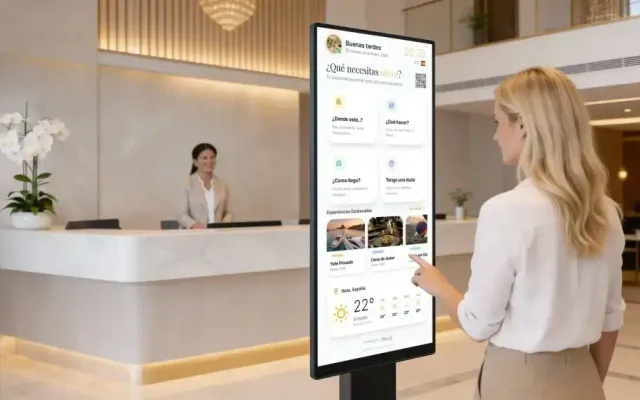
- Getting people to explore a space (an exhibition centre, a historic quarter, a museum, a campus): a phygital treasure hunt.
- Building reach and recall: an AI photo, because almost everyone likes leaving with a good picture.
- Understanding the audience or collecting contacts: an interactive app with optional sign-up and a clear reason to share details.
Most projects combine several formats in a single experience. Before designing anything, agree with the client how success will be measured: participation, completed routes, time spent, images downloaded or contact consents. A metric that is not decided before the event cannot be rebuilt afterwards.
The tailored quiz: questions that teach something
A good quiz does not test people; it reveals something. Every answer, right or wrong, should leave visitors with a fact they did not know, explained in a sentence.
Tailoring means adapting the game to the player: language, level of knowledge, age or professional profile. An international buyer at a trade fair and a pupil at an open day should not face the same questions.
A few decisions make the difference:
- Short rounds and a large question bank, so that playing again is not just memorising.
- Fair leaderboards: by day, by category or by team, so the same expert does not win every time.
- Questions approved by the client and written for play: precise, brief and free of trick wording.
- Instant feedback on screen and an ending that points to the next step of the journey.
Treasure hunts that combine screens and movement
The Special Eurobarometer on sport and physical activity, published by the European Commission on 22 September 2026, reports that 39% of Europeans never exercise or play sport, six points fewer than in the 2022 edition. At the same time, 72% walk for at least ten minutes at a time, and 93% agree that physical activity improves mental health.
The takeaway is practical: walking is within almost everyone's reach. A well-planned treasure hunt turns that walk into a game without asking for any particular fitness.
This is how we approach it:
- Physical checkpoints triggered by QR, NFC or geolocation, depending on the setting and the precision required.
- Challenges that make people look at the place: find a detail, photograph it, count, compare or cooperate with the team.
- Distance and duration announced from the start, with accessible alternatives and no races against the clock.
- A safe route: no challenges that encourage rushing across streets or staring at a phone near traffic.
- Working without coverage: squares, basements, parks and crowded venues often lose signal. We apply the principles described in local-first applications: save progress on the device and synchronise later.
- A live dashboard for organisers showing each team's progress, so staff can be moved to where people gather.
AI photo: the hook everyone understands
A photo needs no instructions. That is why an AI photo works so well as an entry point or as the final reward: visitors take their picture, the AI transforms it with the visual world of the event or destination, and the result arrives on their phone ready to share.
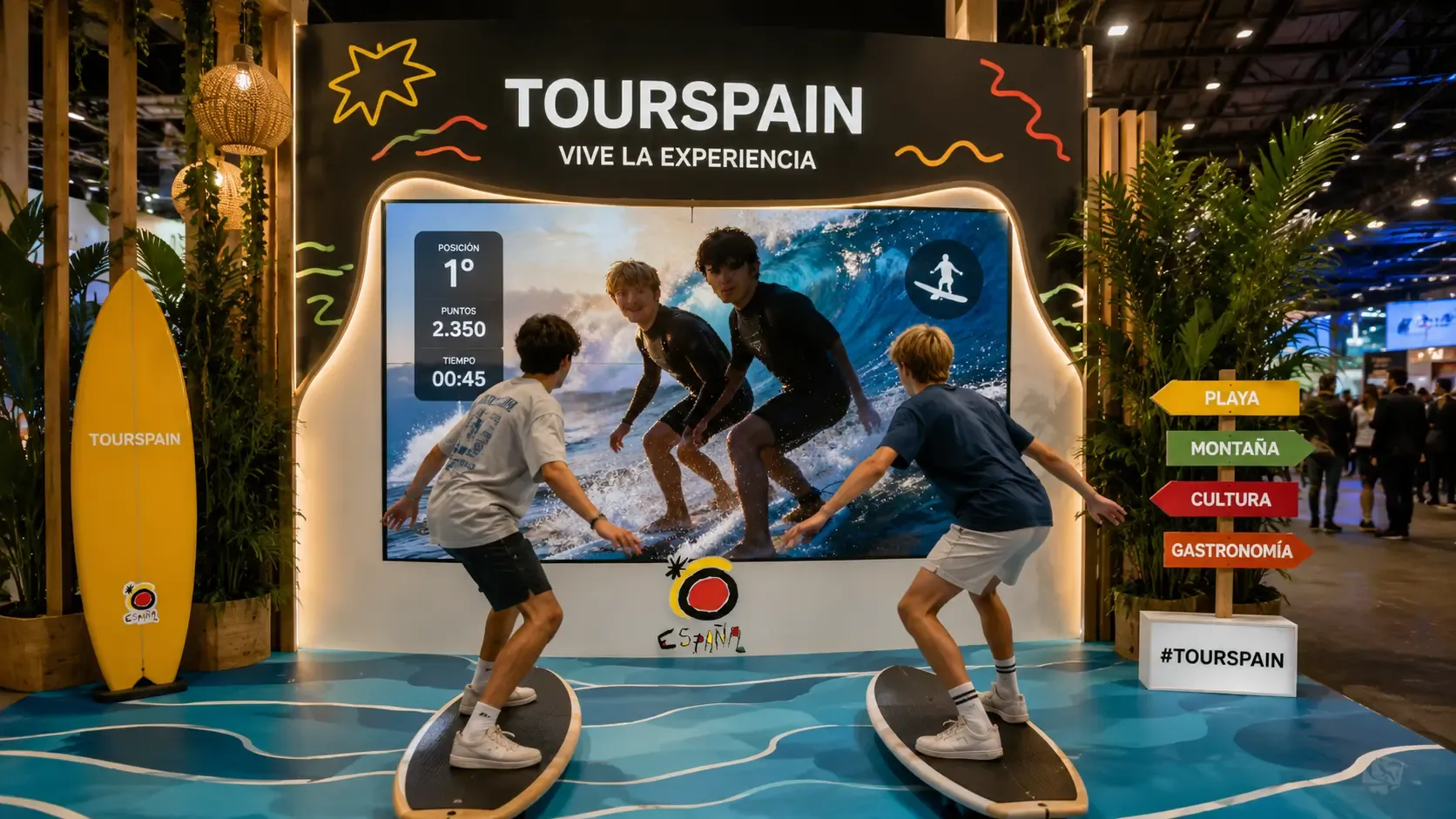
On the Turespaña stand at IMEX Frankfurt 2026, we combined our own AI photo platform, WOMI, with touch-screen gamification and a multilingual AI assistant. The experiences were designed for short, shareable sessions: visitors take their image with them and the stand gains dwell time.
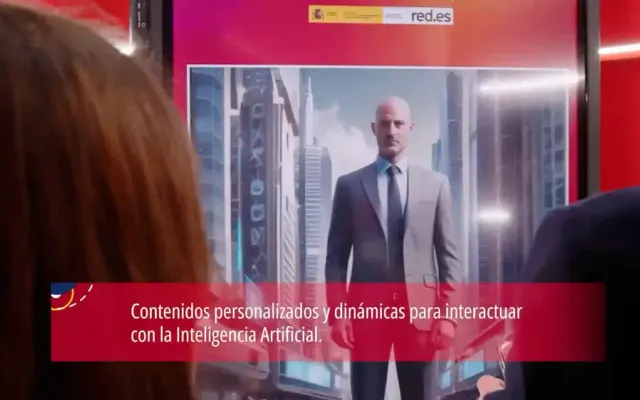
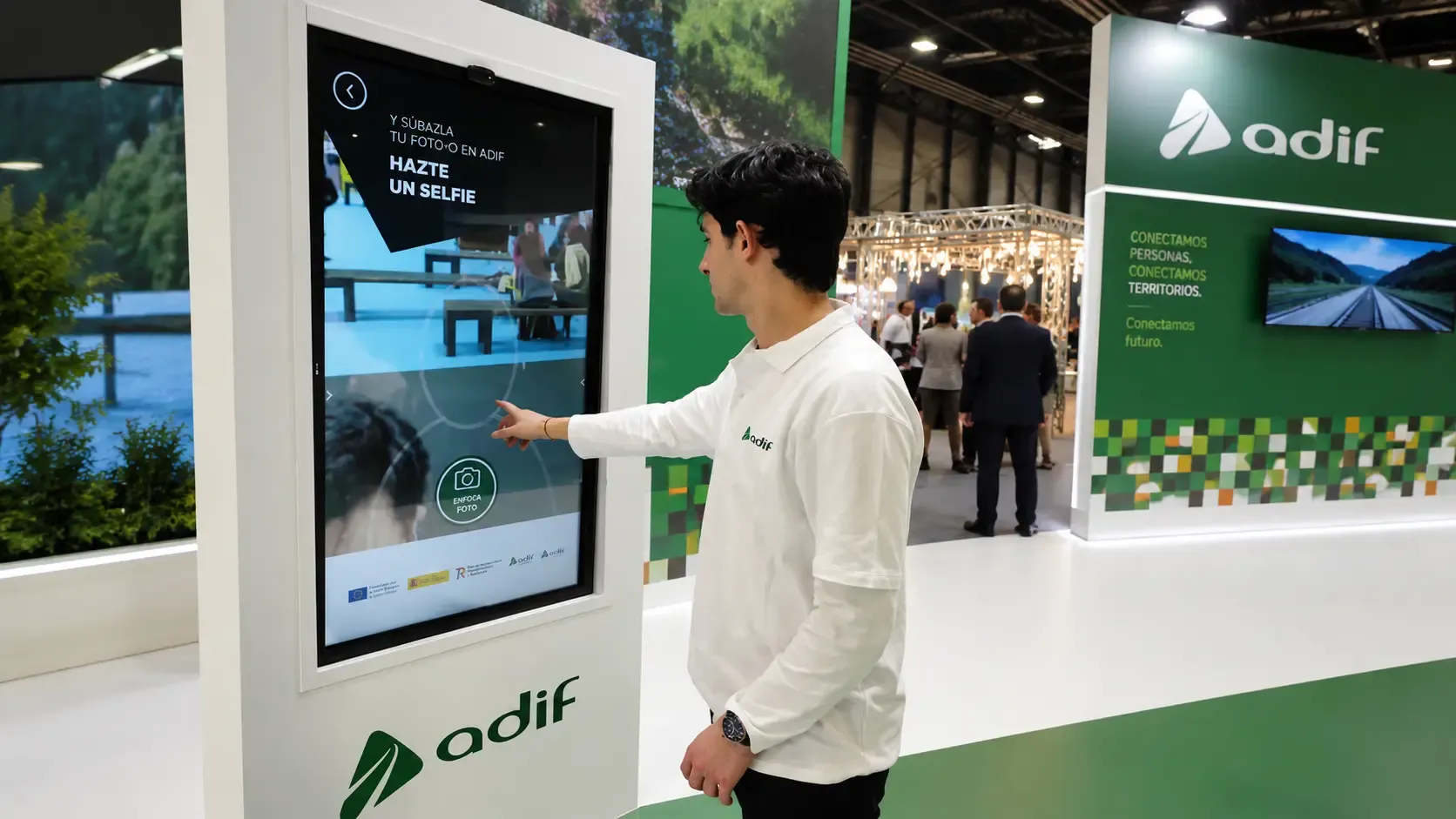
On the ADIF stand about EU-funded projects, visitors rated the content from their phones through a QR code, and an AI selfie kiosk turned the visit into an image they could take home.
What separates a professional AI photo from a filter:
- Bespoke art direction: styles designed for each client, consistent with their identity and tested across ages, skin tones and groups.
- Queue rhythm: a support screen for people waiting and a response time that suits the flow of the stand.
- Frictionless delivery: a QR code to download the image, with no forced registration; contact details are optional and come with a clear reason.
- Part of the journey: offering the photo as the reward for finishing the treasure hunt gives participants a reason to reach the end.
Since August 2026, AI has to say it is AI
Since 2 August 2026, the transparency obligations in Article 50 of the EU AI Act have applied. The European Commission published its guidelines on these obligations on 20 July and, on 10 June, the final Code of Practice on transparency of AI-generated content. The EU has also created a set of icons for labelling that content.
In a gamified experience, this translates into three concrete decisions:
- Mark generated images in a machine-readable format, an obligation for the provider of the system.
- Label visibly any image that could pass as authentic, such as a realistic photo of a visitor somewhere they have never been.
- Disclose from the first interaction when an avatar or assistant talks to the public: people should know they are speaking to an AI.
We recommend labelling every time, even clearly illustrated styles. It costs little and builds trust. Data protection matters too: a photo of someone's face is personal data, so consent, retention periods and deletion must be defined before the event. Each specific case is worth reviewing with the client's legal advisers.
What the mock-up does not show
The most visible part of a gamified experience is the screen. What decides whether it works is the operation behind it. These are the checks we never skip:
- Testing with real users before the event, watching where they hesitate.
- Backup equipment and an offline mode for every critical station.
- Staff who host the experience: technology attracts people, but a person invites, explains and solves problems.
- Content that can be updated during the event without reinstalling anything.
- A closing report with the agreed metrics, useful for the next edition or to justify the investment, as we explained in AI for events and trade fairs.
If you are preparing an event, a trade fair or a destination activation and want people to play, move and leave with a memory, tell us your goal. At Viseni we design the whole journey, from the quiz to the treasure hunt and the AI photo, with the judgement that comes from more than a decade of interactive experiences.