3D design on the Costa del Sol: images for buyers who decide from abroad
In the second quarter of 2026, foreign buyers made 37% of home purchases in the province of Málaga. For many of them the render is the first viewing, so it has to answer their questions.
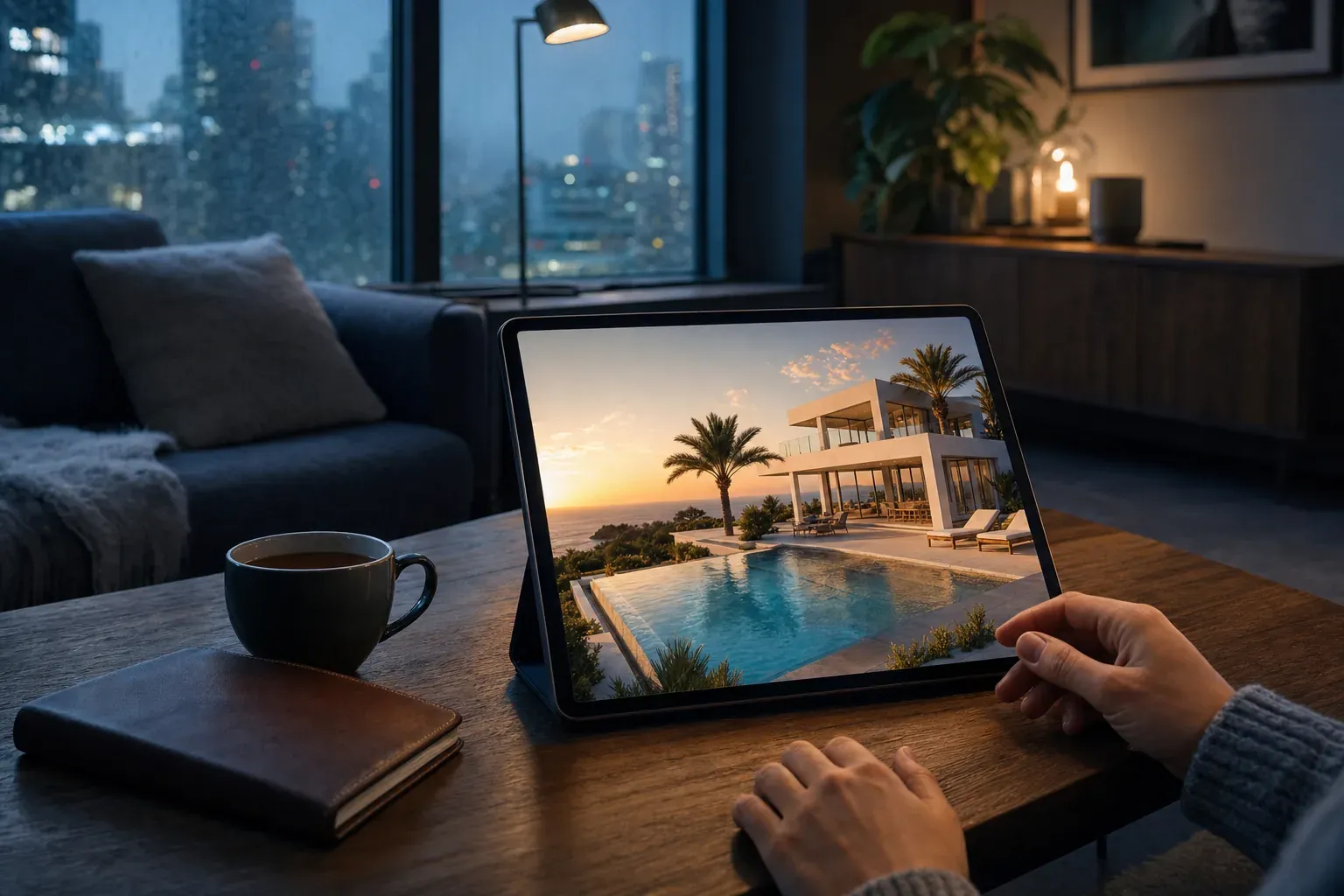
Imagine a rainy night in Amsterdam. A couple are looking through the brochure for a villa in Estepona on a tablet. They have never set foot on the plot, do not know the street and have no idea when the sun reaches the terrace. What they see on the screen will decide whether they book a flight or move on to the next development.
The scene is far from unusual. According to the Property Registry Statistics for the second quarter of 2026, published by Spain's Association of Property Registrars in August, foreign buyers accounted for 37.01% of home purchases in the province of Málaga, the second-highest share in Spain after Alicante.
On the Costa del Sol, 3D design is often a buyer's first viewing of a home: every image should answer a specific question and promise only what will be built.
A market that buys from abroad
The same report puts foreign buyers' share of home purchases across Spain at 15.98%, the highest in its historical series. By nationality, at national level, British, Dutch, German, Moroccan and Romanian buyers lead.
For a developer in Marbella, Estepona, Benahavís or Mijas, the practical reading is clear: a large share of buyers will discover the project on a screen, in another language and probably without having visited the area. The render stops being an extra in the brochure and starts doing the job of the first viewing.
That changes the brief. The question is no longer "how many images do I need?" but "what does the buyer need to know before getting on a plane?". We suggest organising the material around five questions:
- Where is it?
- What will I see from home?
- What is the light like through the day?
- How does it feel to live inside?
- What is included, and what can I choose?
Where is it? Context matters more than the façade
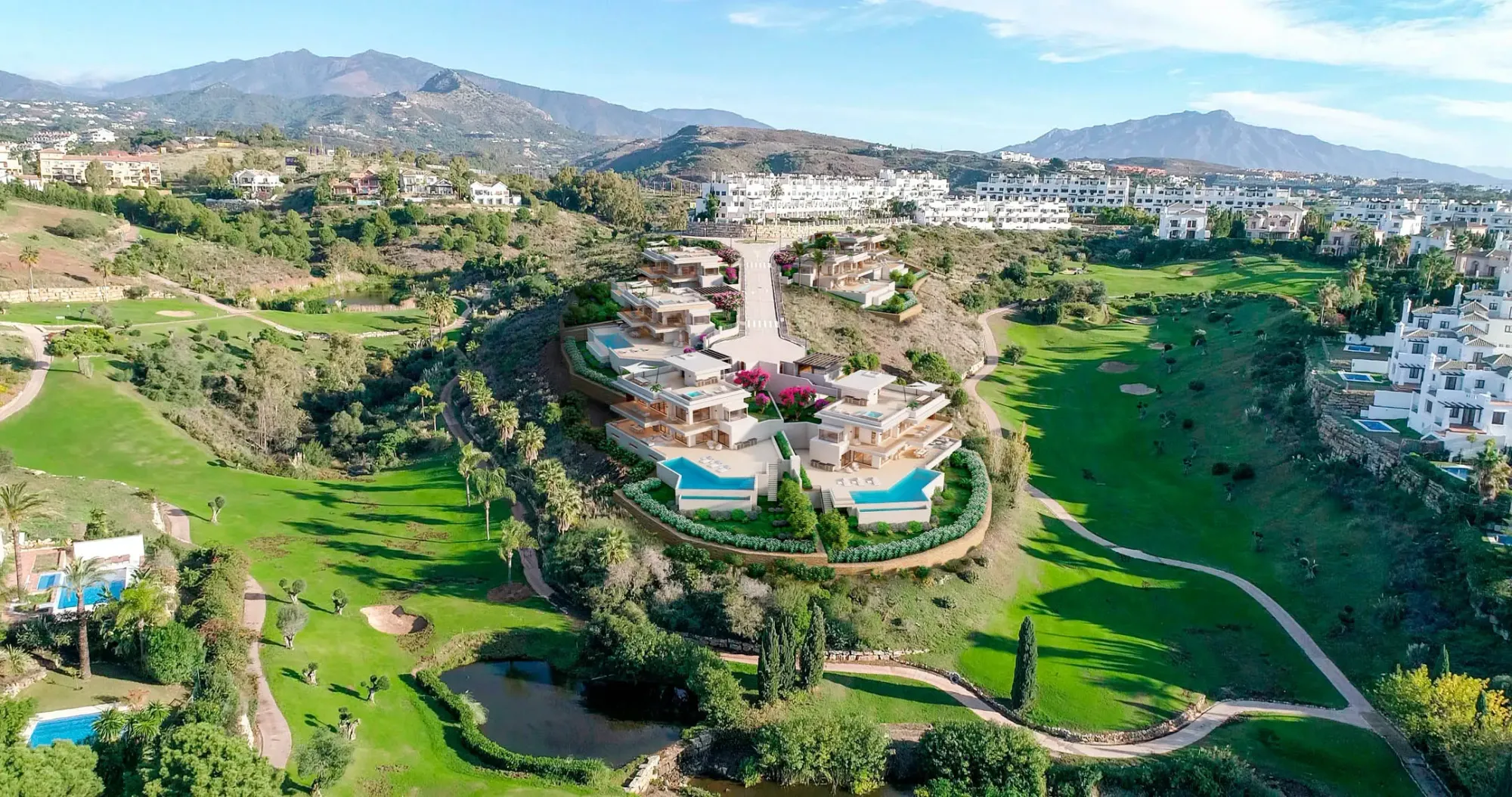
Someone living two thousand kilometres away cannot tell whether a development sits next to the motorway or at the end of a quiet valley. A context aerial, showing the sea, the mountains, the golf course and the real access roads, answers that doubt before it becomes an objection.
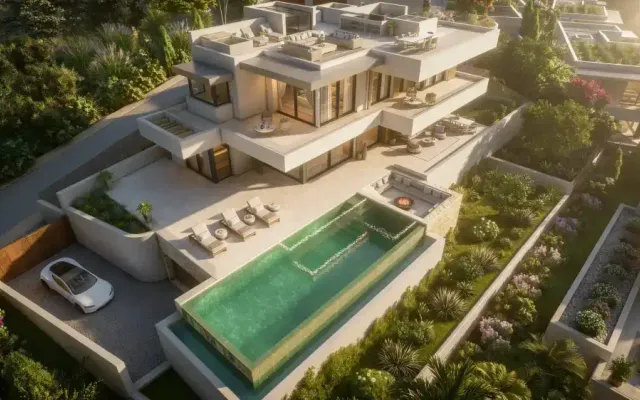
The aerial view of La Resina works this way: it shows the scheme between the golf course and the mountains, the context that weighs most in a purchase decision.
Views from the home are best built from real material: photographs or a drone flight at the height of each floor. A generic sea backdrop can be beautiful and, at the same time, untrue.
Costa del Sol light, at the hour that sells
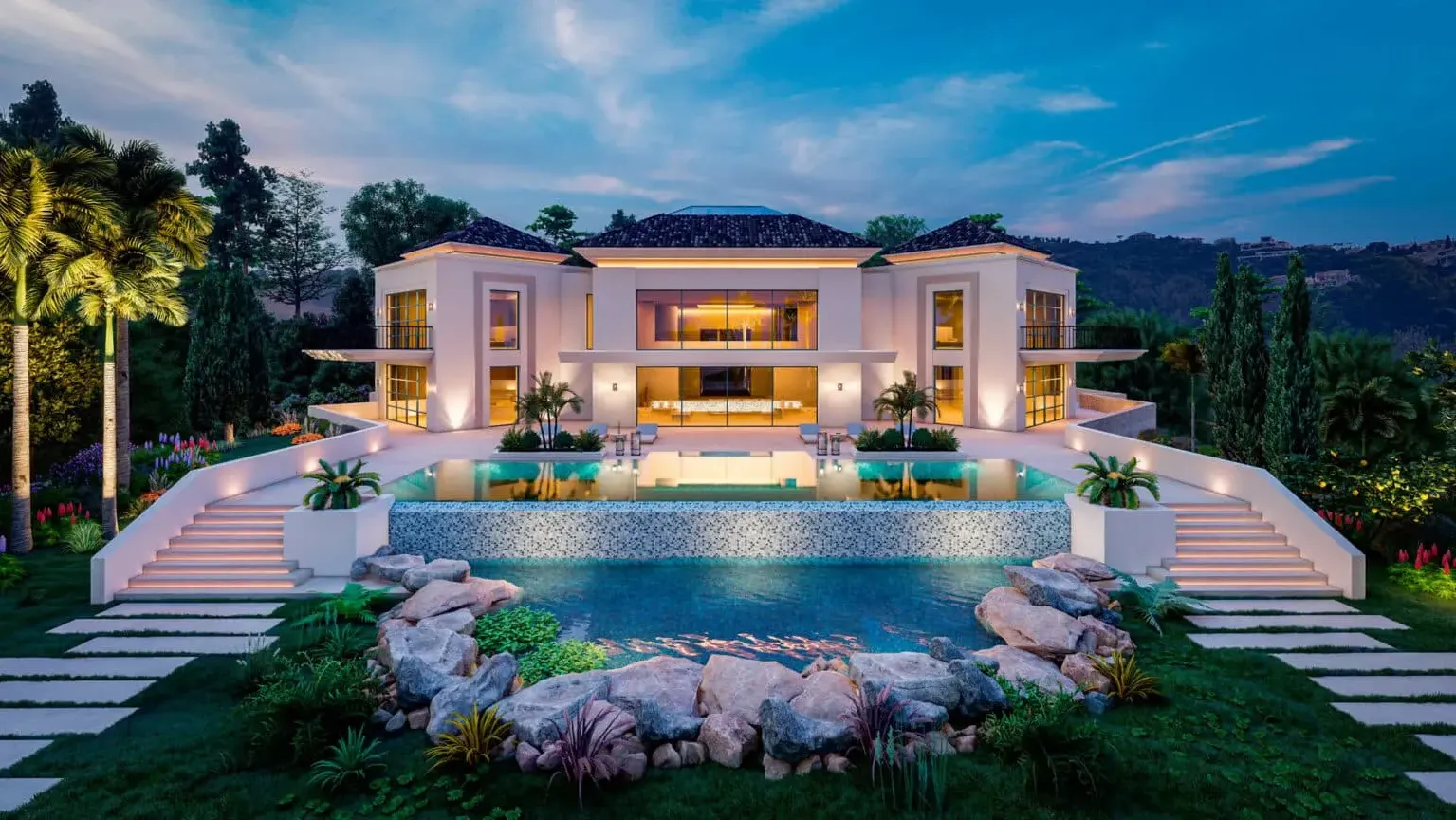
The light of the Costa del Sol is a selling point in itself, especially for someone looking at it from a northern European winter. But it has to be the light of the plot: its real orientation, the shadows cast by the hillside and neighbouring buildings, and the time of day each space is actually used.
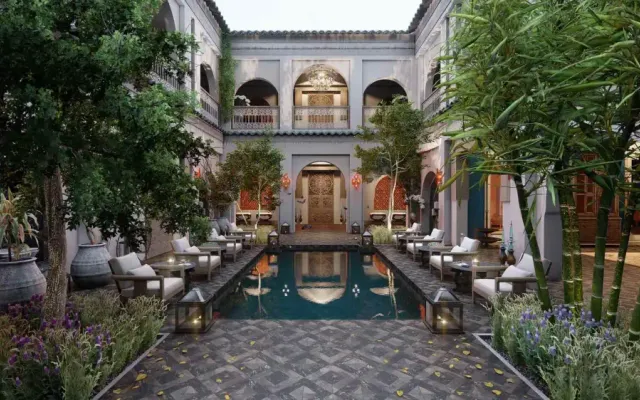
Repeating a view by day and at dusk is an effective way to tell that story. For the villa in La Zagaleta, in Benahavís, the series presents the house from the garden, with the rock pool in the foreground, then repeats the view at dusk with the exterior lighting on.
How it feels inside, and what can be chosen
Interiors answer the most personal question: whether the home fits the buyer's life. Furniture at the right scale, a layout that reads clearly and materials consistent with the specification are worth more than spectacular styling.
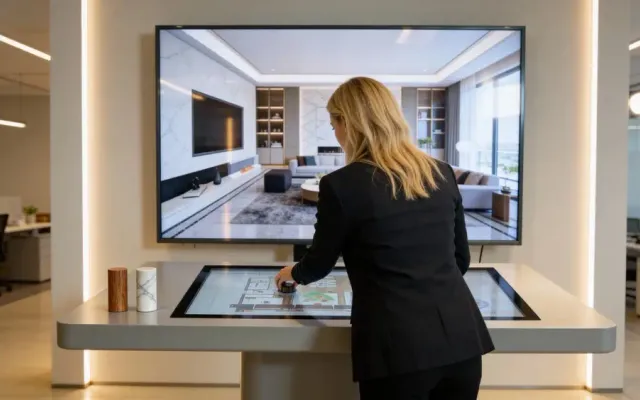
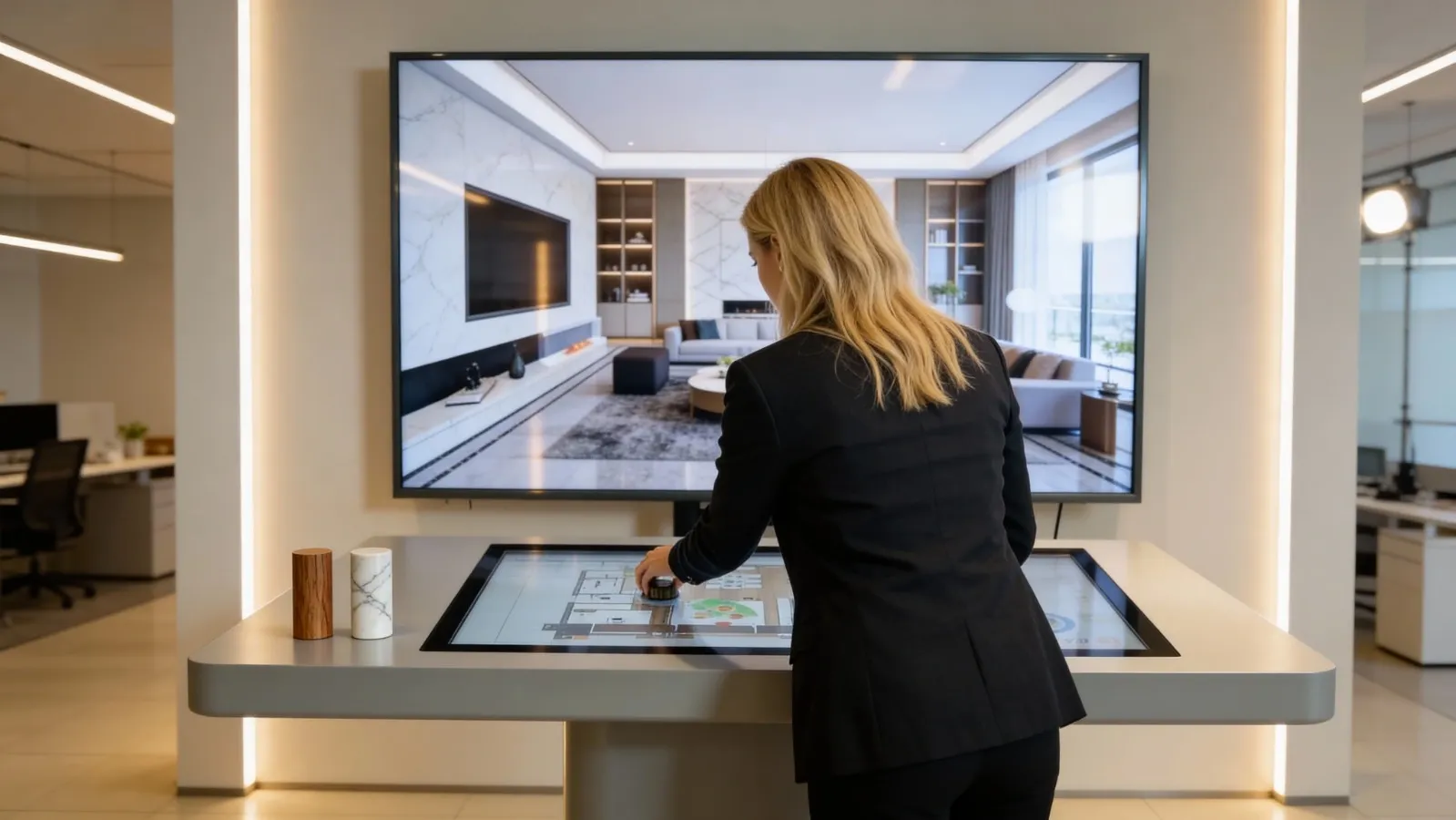
When choosing finishes is part of the sale, a still image falls short. With VLI Commander, which we built in Unreal Engine 5 for a client's showroom, buyers move through the home on a 32" touchscreen and choose flooring and finishes for the kitchen, living room, bathroom and bedrooms in real time, while the 60" display shows the interior in photorealistic quality.
Every render is a promise
In Spain, advertising for a home is more than marketing. Article 3.2 of Royal Decree 515/1989 states that the details, features and conditions relating to a home's construction, location, services and installations included in its offer, promotion and advertising are enforceable even when they do not appear expressly in the signed contract.
Giving legal advice is not our role, and every development should review its material with its legal advisers. What 3D design can do is reduce the room for misunderstanding:
- Views true to the real height of each floor, without opening up panoramas the building will not have.
- Finishes that match the specification, with a clear distinction between what is included and what is optional.
- An honest setting: no erasing neighbouring buildings or inventing green spaces that are not part of the project.
- Controlled versions: when the project changes, the images change with it and old ones are withdrawn from portals and brochures.
This discipline protects the developer and also the buyer, who is deciding on something they cannot yet touch.
From Estepona to Málaga: each area needs its own story
The Costa del Sol is not a single market, and 3D design should reflect that. Some examples of how the approach changes:
- Estepona: for a development near the seafront, it is worth showing the relationship with the promenade, the beach and life on foot as clearly as the home itself.
- Marbella and Benahavís: hillside villas and gated estates, where privacy, views and the way the house sits on its plot carry the argument. With Marbella's new General Plan, the study phase also gains weight, as we explain in 3D design in Marbella under the new PGOM.
- Mijas, Benalmádena and Fuengirola: schemes beside golf courses or with sea views, where the context aerial anchors the whole campaign.
- Málaga city: urban integration, refurbishment and taller buildings, for buyers who also value city life. We cover it on our page about 3D renders and architectural imagery in Málaga.
All of them start from the same method; what changes is the order of the questions and the image that opens the brochure.
One model for every channel
The same buyer will see the project on a property portal, in a message from the agent, on a video call and in the PDF brochure. It pays to plan the formats from the very first view:
- Landscape for the website and portals, portrait for mobile and social media.
- High resolution for the printed brochure and site hoardings.
- Images without embedded text, so they work in any language; captions belong in the brochure or website layout.
- Video or a virtual tour when the buyer needs to move through the space. In 3D render vs VR tour we explain when each one is worth it.
Everything comes from the same 3D model. The earlier the work is planned that way, the more consistent the buyer's experience will be across channels. Our page on 3D renders and visualisation on the Costa del Sol shows how we work for developers and architects along the whole coast.
If you are about to market a development on the Costa del Sol and many of your buyers will first meet it on a screen, tell us about the project. We design the material to answer their questions before they ask them.