Beacon 9: a playable story in the browser, with nothing to install
Beacon 9 is free to play in the browser, on a computer or a phone. We look at how its story was built, the technology behind it, how AI multiplied production and what brands and events can take from it.
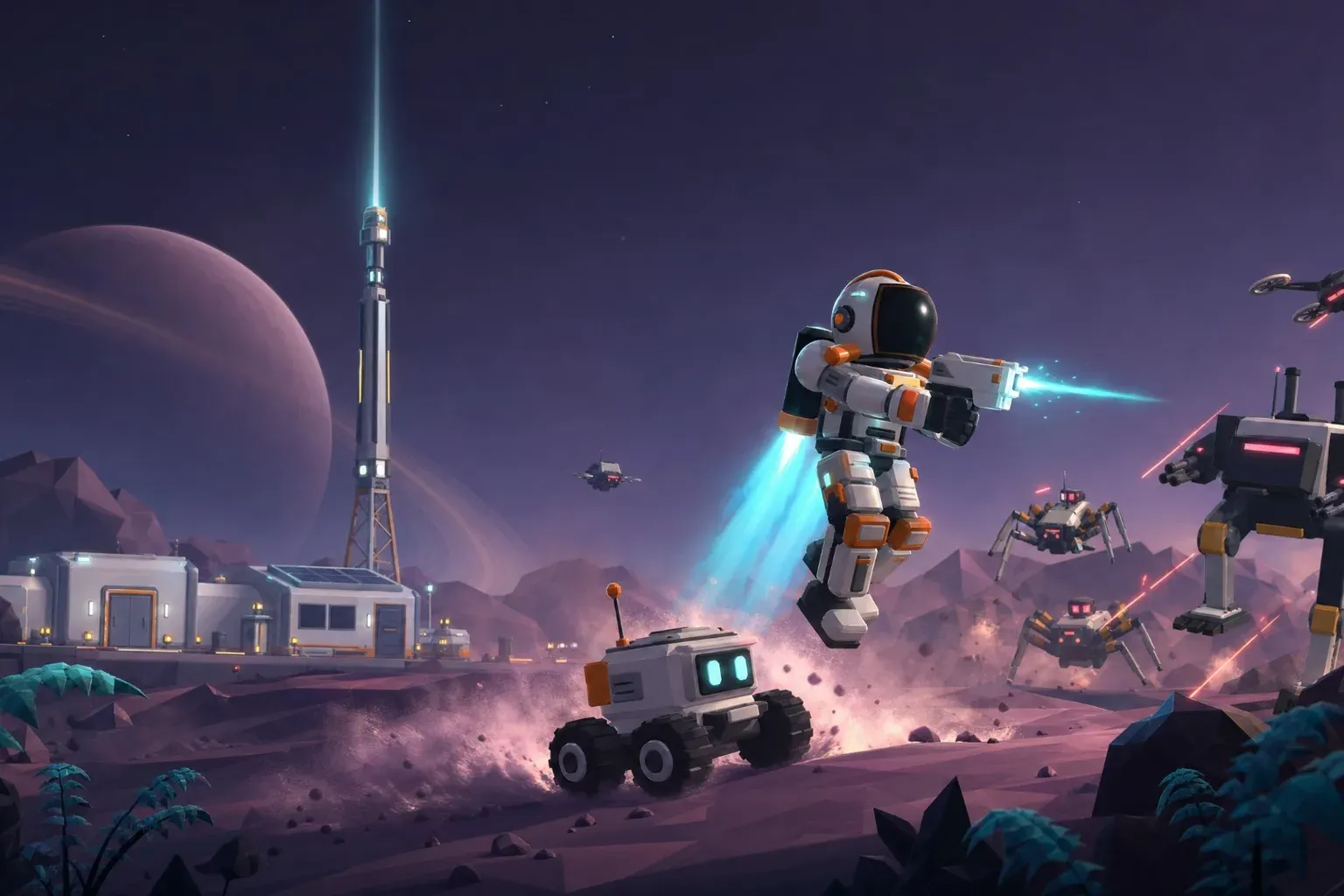
You arrive to switch off the last station in an abandoned sector. When you restore its power, the beacon wakes up and a transport listed as evacuated calls for help. Fourteen people are still out there, and nobody is coming for them.
That is how Beacon 9 begins: a low-poly sci-fi adventure released on itch.io on 15 October 2026. It is free to play in the browser, on a computer or a phone, with nothing to download or install.
Behind it sits a formula that works as well for a brand as it does for a video game: a clear story, technology that reaches any screen and AI-multiplied production make it possible to build experiences people finish, remember and share.
A premise you can grasp in one sentence
Beacon 9's story fits on a single line: you came to close a station and discover that people are still waiting. That clarity is no accident. From the start, the game's concept document set out three pillars worth borrowing:
- Every repair helps someone. Powering a core or rebuilding a module opens routes and supports rescues; it is never an isolated chore.
- The story moves forward as you play. A recovered log, a physical clue or a survivor brings new information and the next objective.
- Progress deserves a picture. Cutscenes show what the player has achieved and change what the station means.
Even the conflict has a narrative reason. The machines that attack you are not evil: they are still obeying a shutdown order that nobody cancelled, which is literally the title of one of the chapters. The list of crossed-out stations that opens the journey is turned around at the end, when the objective is to confirm, one by one, the fourteen names of the people boarding.
Changes of pace without losing the thread
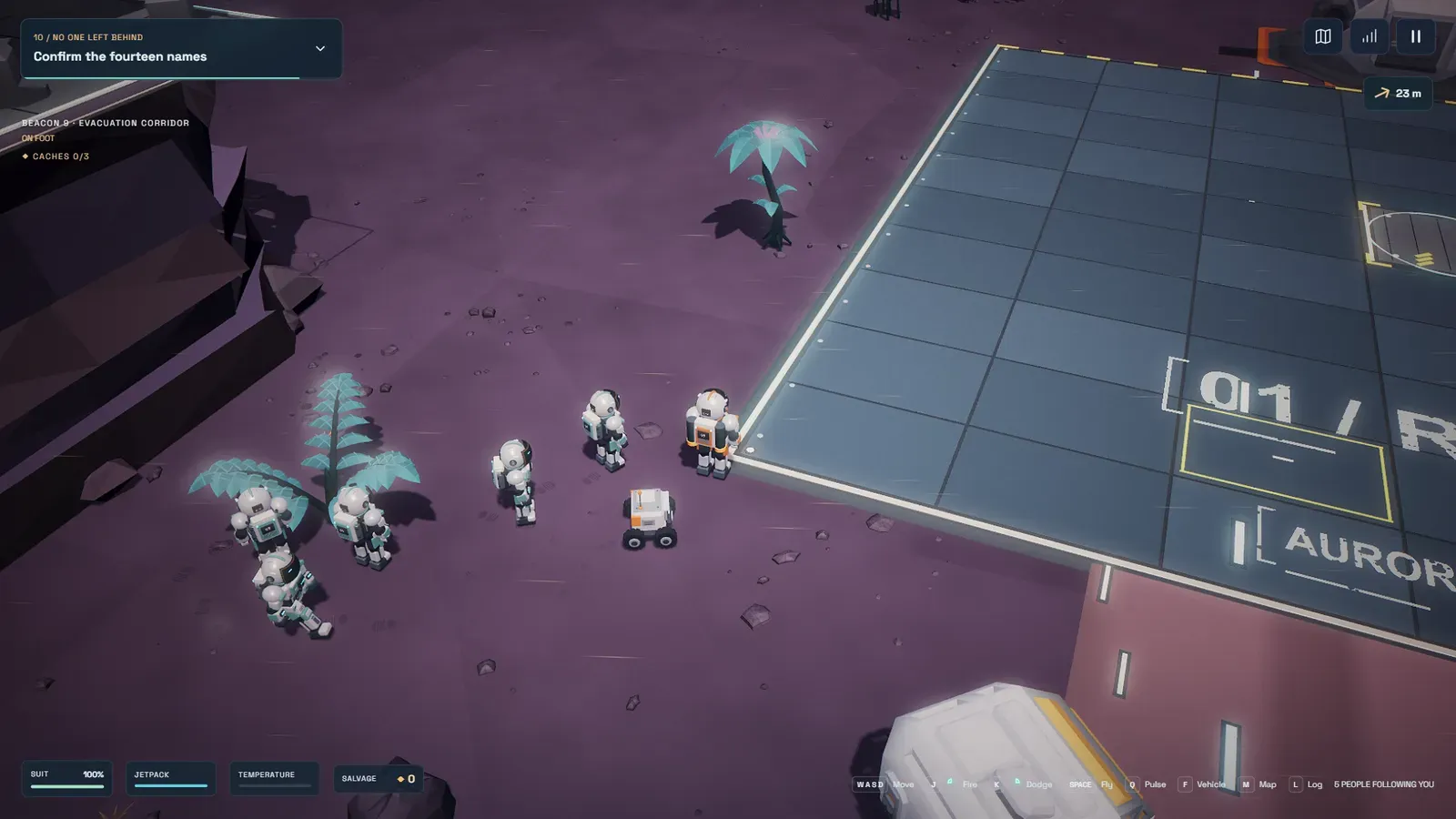
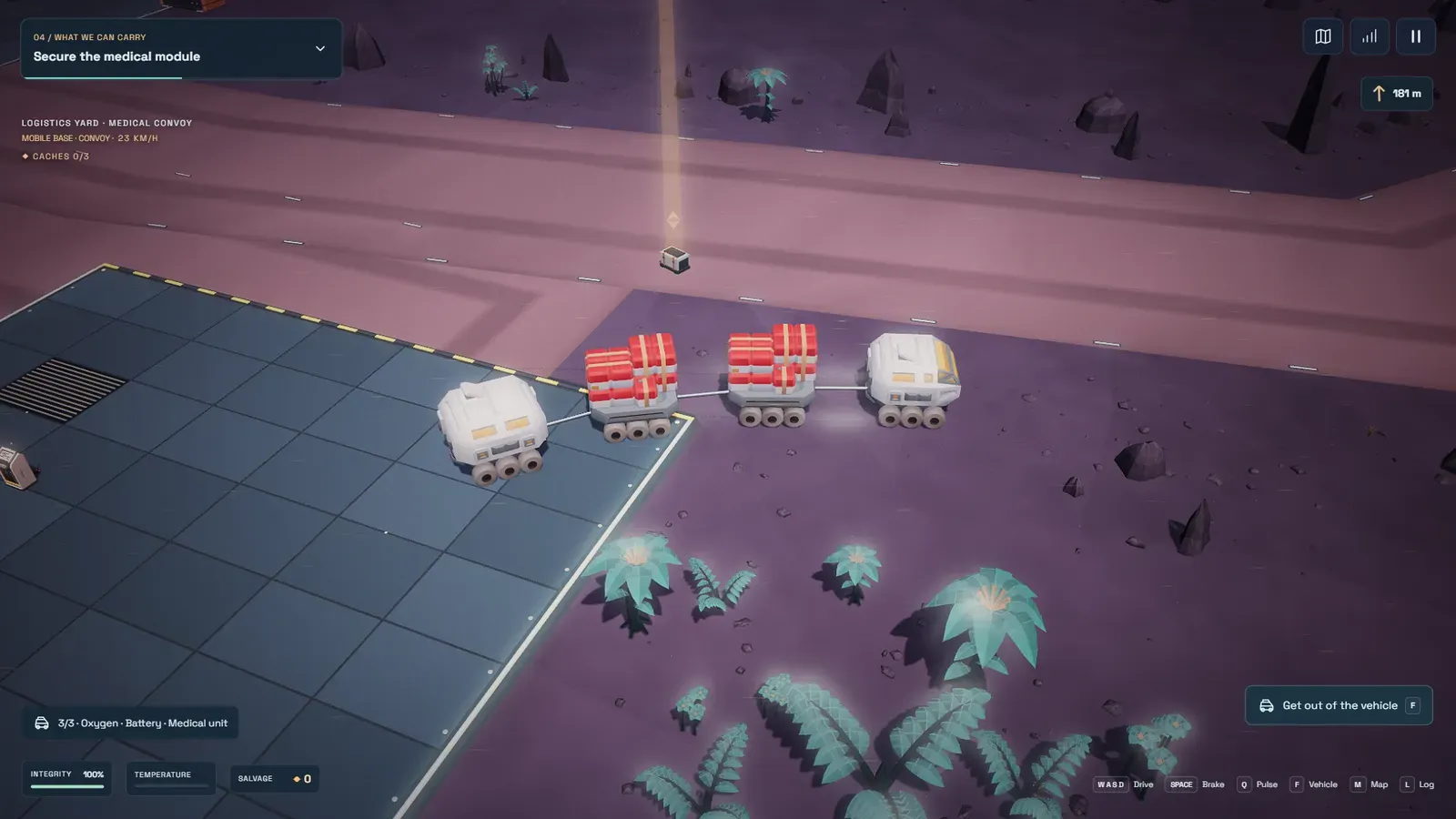
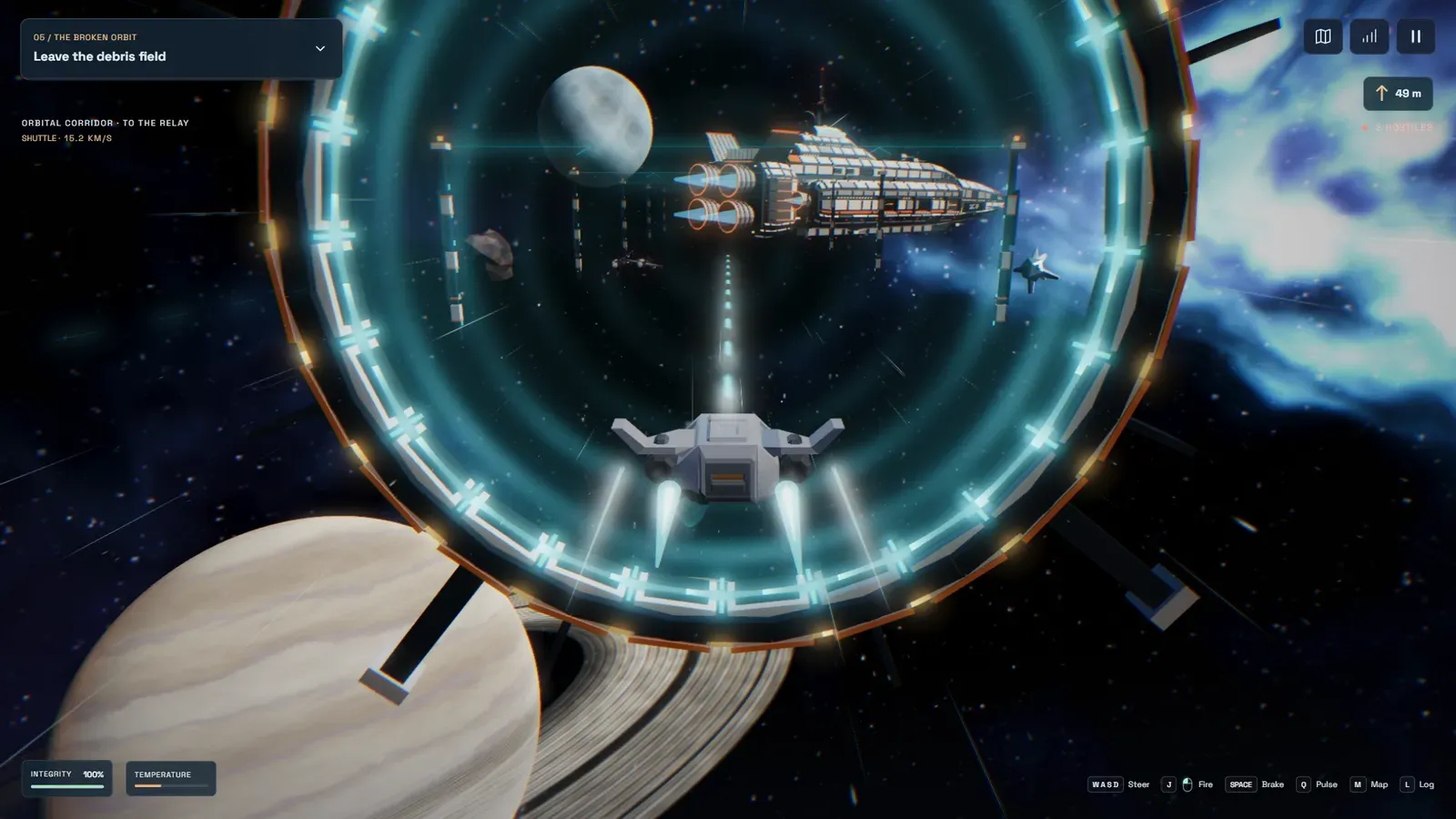
The campaign has a prologue and nine sectors, around 60 to 90 minutes of play. You fight with a jetpack against drones, turrets and colossus walkers; you drive a rover, two trucks and an articulated mobile base; you head into orbit twice; and between fights you carry parts, follow clues and reroute power.
What matters is that every change of pace answers to the story. The convoy is not there because driving is fun, although it is, but because oxygen, batteries and a medical unit have to reach the people waiting. The orbital run is not a separate mini-game: it is the corridor that has to be opened so the rescue ship can arrive.
Beacon 9 is built with Babylon.js, the web rendering engine whose version 9.0 was announced on 26 March 2026 with features that work on both WebGPU and WebGL 2. Around it sit Nuxt 4 and Vue for menus and the interface, TypeScript, and Blender, where the original models and Kay Lousberg's CC0-licensed KayKit Space Base Bits station kit were prepared. The result is a static website: the same package is published on itch.io and on Wavedash.
The browser is already a serious 3D tool, as we explained in our piece on WebGPU and 3D applications in the browser. But “works on any device” is not a box you tick. It is the sum of many decisions:
- Three ways to play. Keyboard and mouse, any standard gamepad with no setup, and touch controls with an on-screen joystick.
- Quality that adapts. Shadows use finer filtering on desktop than on phones and, if a device cannot hold the frame rate, the resolution steps down once and never climbs back, so the image does not pump.
- Effects that go easy on the GPU. Each explosion is a single draw call, and ships shatter into their own polygons, animated in the shader.
- No hitches mid-game. Enemy and debris shaders are compiled during the loading screen, not in the first fight.
- Automatic language and progress. The game starts in Spanish or English depending on the browser, and it saves on its own.
The game's page states which parts relied on AI: code, graphics, sound and text. The illustrations, story cutscenes, voices and music were produced with generative tools (GPT Image, xAI and ElevenLabs), and AI assisted with the programming and the writing. The concept document is dated 2 October 2026; the game was released on 15 October.
What AI multiplies is not just the speed of writing code. It is the whole workshop:
- Art and cutscenes. Illustrations and narrated sequences that, in a traditional production, call for several specialists.
- Voices in two languages. Narration in English and in Spanish from Spain, with subtitles.
- Automated testing. Full campaign runs with simulated input, on desktop and on emulated phone sizes, plus a test that blocks any untranslated text from shipping.
- Promotional material. The trailer was captured deterministically, stepping the page clock frame by frame, to get an exact 60 fps on any machine.
There is one decision that matters to any client: nothing is generated while you play. All the AI-made content was produced beforehand and ships inside the game as local files. There are no calls to AI services during play, no usage costs and no surprises on the day of the event.
What stays human is what defines the experience: the premise, the tone, the pacing of each chapter and what gets left out. We looked at that change of role in depth with Luigi's Pizza House.
From a game to a brand experience
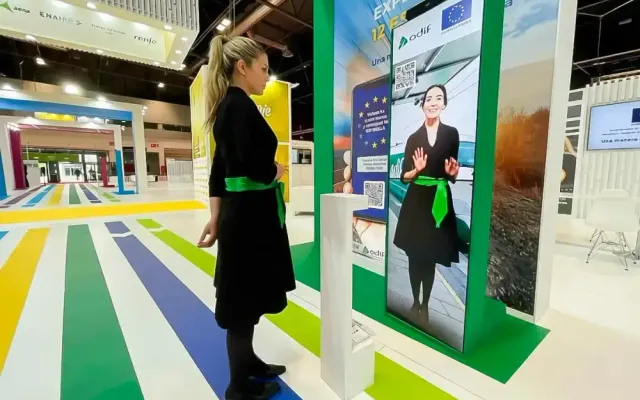
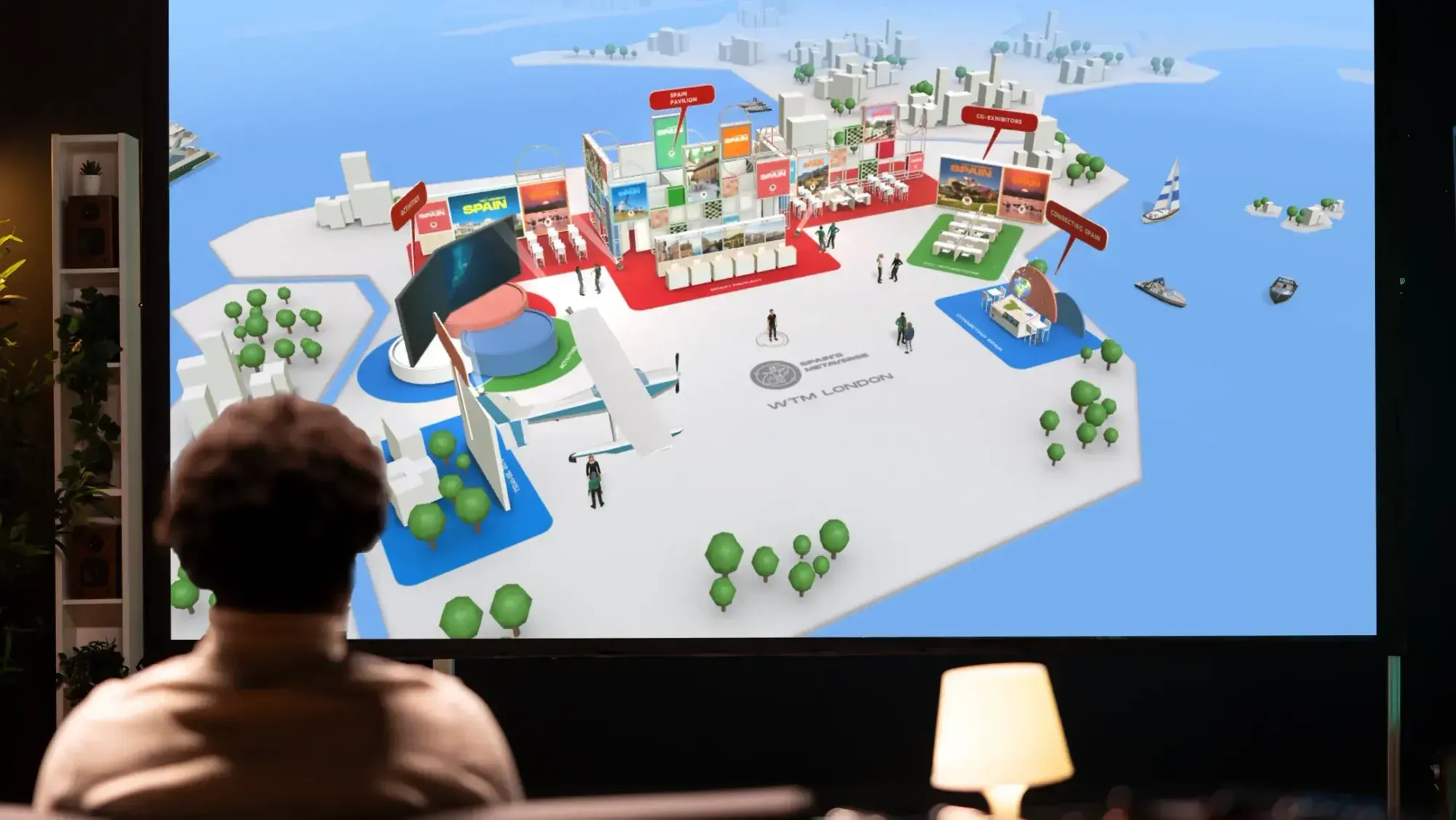
The same building blocks can tell stories that have nothing to do with science fiction. We already applied the technical foundation in 2023 to the Turespaña metaverse: a WebGL world where characters move around the space and interact with the co-exhibiting companies. On the stand it worked as a visual, intuitive information point.
Let us imagine how Beacon 9's logic could carry over to other briefs:
- Product launch. A short mission in which the product is the tool that solves the problem, not a logo on a wall.
- Trade fair stand. A two- or three-minute arena mode with a daily high score, designed around the pace of the queue.
- Congress or convention. A campaign split into chapters that unlock each day and give people a reason to come back.
- Internal training. Each chapter is a module, and the story keeps people engaged.
In every case people get in through a QR code or a link, with nothing to install, and the experience stays available after the event.
How we approach a project like this
- Write the premise in one sentence and decide what the player should feel at the end.
- Choose a core mechanic tied to the message. In Beacon 9 it is repairing in order to rescue; for a brand it might be assembling, choosing or discovering.
- Fit the length to the context. Three minutes on a stand is designed differently from half an hour at home.
- Define devices and controls from day one: touch, gamepad, kiosk or the visitor's own phone.
- Produce with AI and document the rights: licences, credits and what was generated.
- Test automatically and with real people, on the devices that will be used on the day.
You can play Beacon 9 for free on itch.io on a computer or a phone. If you want to turn your brand's message, your stand or your event into a story people want to finish, tell us about your idea.