
How AI is transforming architectural visualization
A look at the future of 3D rendering and artificial intelligence in high-end real estate projects.
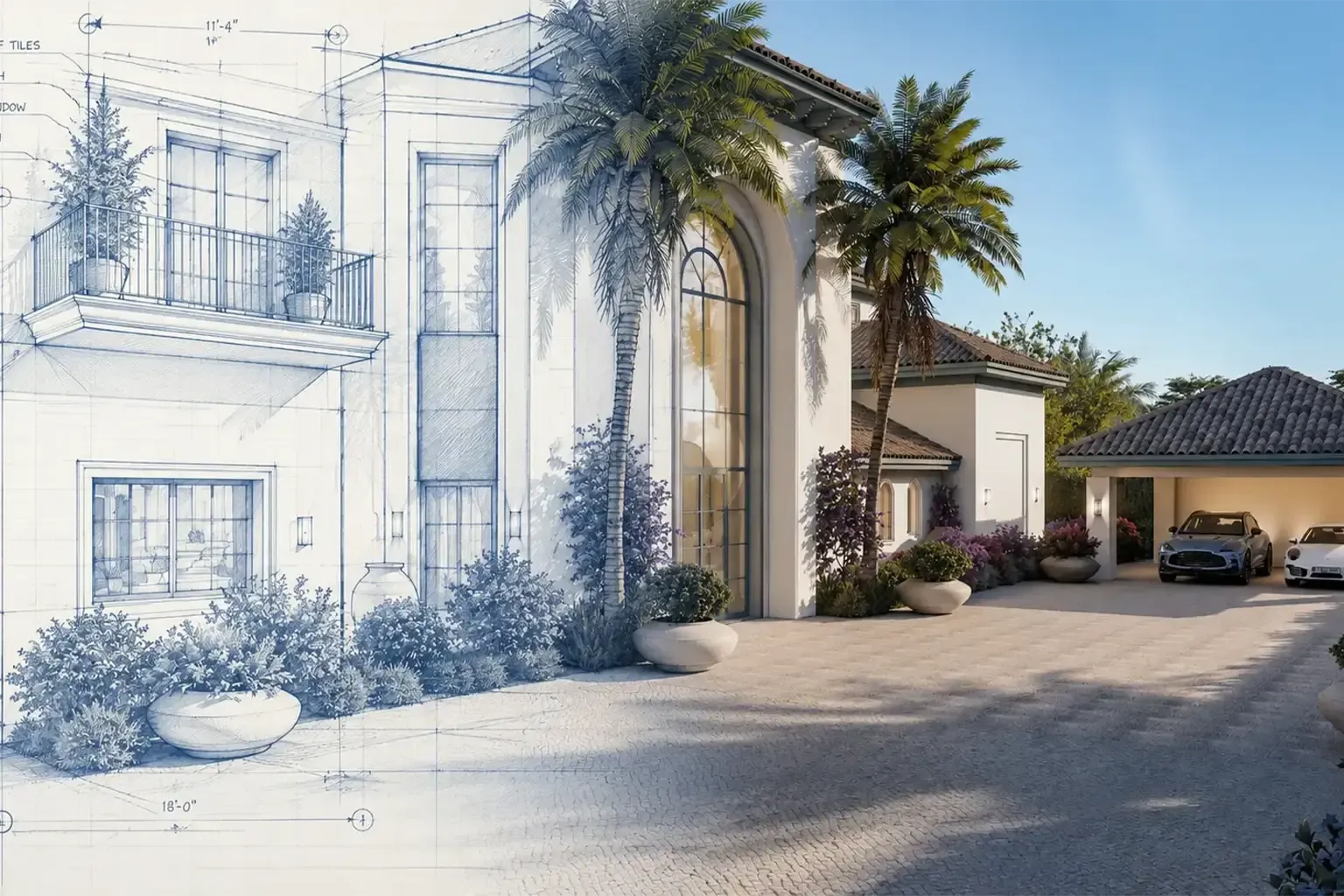
For years, architectural visualization was a technical service. Something that appeared at the end of a project to "make some pictures" and help sell a real estate development.
The process was slow, expensive, and extremely manual. Achieving a high-level render could take weeks of work across modeling, lighting, composition, and post-production.
Today, that paradigm is changing at a rate that is hard to ignore.
The combination of advanced 3D rendering and artificial intelligence is transforming how architects, developers, and investors present their projects. It's no longer just about showing what a building will look like.
It's about generating desire before it's even built.
Much more than pretty pictures
What's interesting is that the revolution isn't just happening in visual quality.
It's happening in speed, accessibility, and who can compete in the market.
Just a few years ago, producing premium-level architectural images required specialized teams, senior artists, and high budgets. Today, tools like Midjourney, GPT-Image, or new hybrid workflows are dramatically lowering the barrier to entry.
A small studio can generate visual proposals that were previously only within reach of large production teams.
This democratizes many things.
But it also creates a new problem: when everyone can generate impactful images, value no longer lies solely in the tool.
It starts to lie in judgment.
So, why isn't everyone investing in this?
Because most clients don't buy innovation.
They buy safety.
They buy trust.
They buy the feeling that the project will sell better, faster, or with less risk.
And that's where many companies fail when communicating these types of services. They talk about AI, automation, or real-time engines as if that alone were enough to convince a client.
Usually, it isn't.
A developer rarely thinks:
"I want artificial intelligence for my renders."
What they really think is:
"I need this project to stand out from the rest."
"I need to sell before I build."
"I need the client to understand the value of this development."
Technology only matters when it solves a real business problem.
The great lowering of the barrier to entry
AI is doing something very interesting within the sector.
It's removing part of the technical difficulty.
Today, it's easier to generate spectacular images than it was five years ago. And that is causing a massive shift in the market: more competition, more speed, and also more pressure on prices.
Many studios see this as a threat.
And it makes sense.
If anyone can generate an attractive image in minutes, what differentiates a premium studio from someone using automatic tools?
The answer isn't in producing more renders.
It's in building better visual experiences.
Because a truly powerful render doesn't just show a space.
It directs emotions.
It builds perception.
It makes a property feel more exclusive, warmer, or more aspirational.
And that still depends deeply on the human eye.
AI does not replace judgment
Artificial intelligence can accelerate processes, propose variations, or automate repetitive tasks.
But it still doesn't understand architectural intent, aesthetic sensitivity, or commercial strategy (at least for now).
That's why the future likely won't belong to those who simply use AI. It will belong to those who know how to direct it.
This is where the true value of modern architectural visualization begins to be redefined.
It's no longer about who renders faster.
It's about who makes a project be perceived better.
What's coming now
The line between architecture, marketing, and digital experience is starting to disappear.
Real-time visualization, interactive configurators, 3D web experiences, BIM integration, and increasingly immersive environments no longer seem futuristic.
They are starting to become expectations.
And in a market where attention spans last seconds, that difference matters more than ever.
Because in the end, architectural visualization is no longer just about showing spaces.
It's about making someone want to live in them before they even exist.